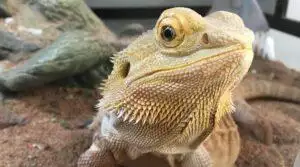
Bearded dragons are one of the most popular and rewarding reptile pets in the UK. Known for their docile nature and unique personalities, they make excellent companions. However, getting their environment absolutely right is critical for their long-term health. This 2026 guide covers the essential requirements for a thriving “beardie”.
Vivarium Setup & Size
A common mistake is buying a small vivarium for a baby dragon. They grow incredibly fast, reaching up to 24 inches (60cm) in length. You should start with their adult enclosure immediately to save money and provide a stable environment.
- Minimum Size: 120cm x 60cm x 60cm (4ft x 2ft x 2ft). A wooden vivarium is highly recommended in the UK as it retains heat far better than an all-glass terrarium.
- Substrate: While many use a sand/soil mix, loose substrates carry a slight risk of impaction if accidentally ingested. Reptile carpet, stone tiles, or paper towels are safer, especially for juveniles.
- Enrichment: Provide sturdy branches for climbing and a flat slate or rock under the basking lamp to absorb and radiate heat. Provide hides at both the hot and cold ends.
Temperature & Heating (The Gradient)
Bearded dragons are ectothermic; they regulate their body temperature by moving between hot and cool areas. You must provide a “thermal gradient”.
- Basking Area (Hot End): Directly under the heat lamp, the temperature should be a scorching 38–42°C (100–107°F). This is essential for proper digestion.
- Cool End: The opposite side of the vivarium should be between 22–28°C (71–85°F).
- Nighttime: Temperatures can safely drop to 15–21°C. If your house gets colder than this, use a Ceramic Heat Emitter (which produces no light) to maintain a baseline temperature without disrupting their sleep.
Crucial Safety Rule: Every single heat source must be controlled by a dimming thermostat to prevent fatal overheating, and monitored with digital thermometers at both ends.
UVB Lighting: Non-Negotiable
Without sufficient UVB lighting, a bearded dragon cannot synthesize Vitamin D3, meaning they cannot absorb calcium from their food. This leads to Metabolic Bone Disease (MBD), a crippling and fatal condition.
- You must use a high-output T5 linear UVB tube (e.g., Arcadia ProT5 Desert 12% or 14%). Compact coil bulbs are insufficient.
- The tube should cover roughly two-thirds of the vivarium length, positioned at the warm end alongside the heat lamp so they absorb UV while basking.
- Replace every 6-12 months: UV output degrades over time, even if the light still looks bright.
Run both the heat lamp and the UV light for 12-14 hours a day, turning them completely off at night.
Diet: The Omnivore Shift
A beardie’s diet changes drastically as they age.
- Babies & Juveniles (0-12 months): Need high protein to grow. Diet is roughly 70% live insects and 30% vegetables. Feed insects 2-3 times daily.
- Adults (12+ months): Shift to a plant-based diet to prevent liver disease and obesity. Diet is roughly 70-80% vegetables and 20-30% insects. Feed insects only 2-3 times a week.
What to Feed
- Insects: Locusts, brown crickets, dubia roaches. (Treats: waxworms, mealworms). Never feed insects wider than the space between the dragon’s eyes.
- Greens (Daily): Spring greens, watercress, rocket, butternut squash, bell peppers, dandelion greens.
- Avoid: Spinach (binds calcium) and iceberg lettuce (no nutritional value).
Supplements: All live food must be “gut-loaded” (fed nutritious food before being fed to the dragon) and lightly dusted with a calcium/vitamin D3 powder just before feeding.
Reviewed by Dr. Sarah Jenkins, MRCVS
Dr. Jenkins is a fully practicing veterinary surgeon in the UK with over 15 years of clinical experience in small animal medicine and canine behaviour. She reviews and verifies our health content to ensure medical accuracy.