It’s widely accepted that ickle fluffy hamsters are just about the cutest creatures in the world, and so it’s no wonder that they are one of the most popular choices of domestic pets in the UK.
- FACTFILE
- IMPORTANT THINGS YOU NEED TO KNOW
- WHERE TO BUY A HAMSTER
- CHOOSING YOUR HAMSTER
- •Health
- •Age
- •Sex
- •Handling
- ENVIRONMENT
- •Housing
- •Cage Essentials
- •Bedding & Nesting Materials
- •Temperature & Conditions
- •Lighting & Noise
- •Cleaning
- •Housing In Groups & Environments With Other Animals
- DIET
- •Safe Fruit & Veg
- •Chewing and Gnawing Foods
- •Foods To Avoid
- HEALTH
- •Disturbing Behaviour
- •Other Regular Health Checks
- •Hibernation
- •When To Go To The Vet
- Updated Guidance (2026)
- Cage Size — The Modern Minimum
- Syrian vs Dwarf
- Wheel Size — Getting It Right
- Wet Tail — A Veterinary Emergency
- FAQs
- •How long do hamsters live?
- • 📚 Related Reading
Although sensitive and quiet creatures, their adorable quirks have always been beloved by young children, and so many families choose to purchase one for their kid as a kind of ‘my first pet’ and introduction to animals at home.
However, looking after one is far from child’s play, and there is, in fact, quite a lot to learn before you purchase a new wee little furball!
Sadly though, a lot of misinformation still exists about the care of hamsters, and so many new hammy owners are given the wrong advice when it comes looking after a pint-sized pal.
So to help you avoid running into any issues, we’ve put together this in-depth, trustworthy guide, to clue you up on everything you need to know on hamster caregiving!
FACTFILE
- Lifespan: 2 to 3 years
- Average Height: 5.5 – 16 cm
- Average Weight: 17 – 120 g
- Popular Breeds: Syrian, Roborovski Dwarf, Chinese, Winter Russian & Russian Dwarf
- Diet: Hamster Pellets, Timothy Hay, Fruit & Veg
- Origin: Asia, Europe
IMPORTANT THINGS YOU NEED TO KNOW
Before you decide you really want a hamster, you need to consider these important caregiving factors:
- Hamsters are nocturnal – They sleep most of the day and can be particularly noisy at night!
- Hamsters are fragile – Although they are a great pet for young children, hamsters can be easily injured due to rough or careless handling, meaning kids should always have parent supervision when looking after them.
- Hamsters are sensitive – Hamsters are anxious animals and very sensitive to loud noises. They can often develop stress-related diseases when uncomfortable, and thrive best in quieter homes.
- Hamsters have short lifespans – If you’re looking for an animal companion to bring you decades of joy and fulfillment, a hamster isn’t going to be it.
- Hamster breeds vary greatly in size – Hamsters can be both fairly large and incredibly small depending on the breed, so make sure you choose one that’s suitable for you.
WHERE TO BUY A HAMSTER
Once you’re sure a hamster really is the pet for you, your next question is probably where to buy one from. Thankfully, hamsters are a widely available animal and can be bought from many pet shops, breeders and rescue organisations.
However, you need to make sure that whoever you buy your hamster from is reputable, and that they’ve taken good care of the animal before they come home with you.
This is because hamsters living in poor conditions could easily be carrying illness or infection, which would cause you and your family needless distress or grief should you purchase a suffering animal.
A reputable seller should keep their hamsters in a clean cage, with good access to food and water, preferably in a space on their own without any other hamsters.
Occasionally, you may see female dwarf hamsters in the same environment, but Syrians and groups of any male hamster do not get along, and so if you notice a store or breeder is keeping several in one cage, it’s likely these will all be stressed, unhappy or potentially ill hamsters.
It’s therefore important never to purchase a hamster blind over the internet without seeing it’s current living conditions first!
This is also especially important when buying a hamster from a breeder or pet store, as there are currently no approved or registered hamster breeding schemes in the UK, meaning you will be unable to source their authenticness without viewing their breeding environment for yourself.
A better bet may instead be to source one through reputable rescue organisations such as Blue Cross or the RSPCA, who are always looking to rehome hamsters. They will also often let you examine and handle the hamster before making your decision.

CHOOSING YOUR HAMSTER
Health
Before choosing your little nibbler, you first need to make sure they are in good health and ready to be given a new home.
Healthy hamsters should have been bred and raised in a clean environment that is uncrowded, with plenty of access to food and water. So if you’re witnessing anything other than that upon purchase from a seller, your alarm bells should already be ringing!
If you can, make sure you examine a hamster personally before making any firm decisions.
First, check the hamster’s fur for any patchiness or areas of damage, as well it’s skin for any ominous lumps and bumps. Then assess whether there are any weight issues, such as the hamster being too fat or too skinny. Be sure to also observe their rear end for any signs of wet tail or diarrhoea.
Although slightly more difficult to assess, you should also observe whether they’re teeth are overgrown and that it’s breathing is quiet and easy.
All in all, a healthy hamster will have a clean nose, ears and eyes, free from any discharge and will be displaying an active attitude around its enclosure through eating or exercising.
However, even if your chosen hamster appears fine, if it is sharing a cage with several others that appear to be in a sickly condition, it’s best not to take the gamble. Hamster diseases are very contagious, and so it’s likely your chosen furball will contract the same fate.
Age
As Hamster’s don’t live for very long, it’s paramount you know the approximate age of an animal before purchase.
It is best to adopt one from as young as possible to reap the full benefits of their companionship, with six weeks of age being the recommended point of purchase for baby hamsters.
You can, of course, rehome older hamsters who will be more than thankful of your hospitality, but just be wary that by 1 and a half years old they are considered elderly, and so may not be a presence in your home for much longer than six months.
Sex
We accept that some people want certain sexes of hamster when looking for a pet, and thankfully this is something you can probably determine yourself without the assessment of an expert.
If you want to know the sex of a hamster, simply gently hold them in your hand and then slowly turn them onto their back to expose its belly.
From here, you’re looking to observe something called the anogenital distance (the distance between a hamster’s genitals and their anus).
The distance is much shorter in females and can be difficult to distinguish, whereas a males genital openings will be a centimetre or two away from the anus.
You may also notice visible testicles if they are a male, or nipples along the belly if it is a female.
It can be important to determine the sex of hamsters if you are definitely planning to keep more than one in the same closure.
Although we don’t recommend it, you should only really keep female dwarf hamsters in the same enclosure to avoid unwanted mating or fighting between two males.
Handling
Hamsters can actually take a while to warm up to people, and they are not as some people might assume naturally social animals.
For the first week of owning a hamster, try not to handle them at all, as they tend to be anxious or confused by new surroundings and so need time to get used to their new home. A lot of sudden handling from a stranger would only make this anxiety worse!
Then you must go through a process of taming your hamster, which is essentially teaching it to trust you, be unafraid of you and crucially not nip or bite you every time you try to pick them up!
Never try to handle them during the day when they are most likely asleep and instead wait for them to be comfortable enough to eat, exercise and play in your presence.
From here, you can begin offering them treats, allowing them to come towards your hand, exploring it and building trust. Then begin placing treats on your palm, so that your hamster has to climb onto your hand to get their treats.
You can then begin attempting to scoop up and hold your hamster gently, ensuring this is not done from a great height, should they decide they are not ready and attempt to jump out of your palm.
It is a process that requires you to be patient and gentle, so please don’t rush or become frustrated if your hamster takes longer than a few weeks to get used to you.
They also need to be handled very gently to avoid causing them harm, and so very young children should always be supervised when playing with them.
However, if your hamster is not yet tame or continues to nip or bite in response to being handled, it can be difficult to necessarily handle them when you need to clean their cage.
In this instance, be sure to use gloves to protect your fingers, or distract them with a paper tube full of nesting material that will garner their interest and allow you to transport them somewhere else.
Bear in mind both of these could be stressful situations for a hamster, and so again take as much care as possible.

ENVIRONMENT
Housing
As you are probably well aware, hamsters need to be kept in cages that are well constructed, providing no possibilities for escape and free from sharp hazards which might harm them.
The standard and best choice of cages are wire-topped metal cages with a deep based plastic tray, which can be easily removed for cleaning purposes.
The depth of the tray (minimum 3 cm) is particularly important to allow room for burrowing and nesting, while wire bars also allow something for them to climb up, an activity which hamsters surprisingly enjoy as part of their daily exercise. Although make sure they aren’t small enough to squeeze through the gaps!
This cage must be large enough for them to move around in and depending on the breed of hamster, the bigger or smaller the cage they’ll need.
As the largest breed of hamster, it’s recommended that Syrians are offered a cage with a minimum base of 960 square cm and a 44cm vertical height. Conversely, smaller breeds such as the dwarf require just a 770 square cm base with a 17cm height. You may also want to purchase a cage with multiple levels so that you can offer more amusement and toys for your hamster.
If choosing plastic or glass-walled terrarium style enclosure, be wary that it needs to offer as much ventilation as possible!
Cage Essentials
As well as the cage itself being suitable in material and size, what’s actually inside the enclosure is just as crucial to ensuring your hamster is kept healthy and happy in their environment.
Here are some of the things you’ll want to have in your hamster cage:
Nest Boxes
Hamsters spend most of their day sleeping and so need somewhere to hide and rest in, that’s secluded and dark. Fill the box or bed with nesting material to provide a comfy, safe haven for your hamster.
Exercise Wheel
Hamsters can run up to five miles a night in the wild, and so to hone their natural instincts, they need to be kept actively stimulated at night in their cage. An exercise wheel offers the easiest way for them to keep fit and healthy in this small space.
Toys & Entertainment
Sitting in a cage all day can get boring, and so supplying your pet with more than just a wheel can help keep them curious and enjoying life. Multi-levelled cages provide lots of fun ways to design amusement parks full of tunnels, tubes and interactive playthings to keep them occupied.
Hamster Balls
Hamster balls are often seen as the best way of giving your pet time outside of their cage, and obviously don’t require you to do much handling.
However, don’t think you can just chuck them in a ball and leave them be!
Hamster balls can be potentially dangerous, and so you need to supervise your pet at all times while they’re playing in one, ensuring they don’t meet any hazardous obstacles on their trip!
You should also limit a hamster’s ball-playing time to a maximum of 15 minutes, as they can become stressed or feel confined after a short amount of time.
Chewing Blocks
Hamster’s teeth never stop growing, and so they need items that can help them gnaw down their gnashers to an efficient size. Gnawing blocks and specialised softwood branches can be purchased to help this.
Food Bowls & Water Bottles
To prevent the spread of dirt and bacteria around the cage, food bowls can help keep food that gets left by your hamster to one side and provides them with a designated feeding area.
A constant water source through the use of a water bottle is also crucial, as your hamster should be able to take a drink whenever it needs to.
Bedding & Nesting Materials
Hamsters love nothing more than burrowing through to the bottom of a cage and so providing them with thick layers of nesting and bedding materials is important for their happiness
Although you might assume these are just different ways of describing the same thing, bedding and nesting materials actually have two separately important jobs and so you’ll need to know the difference before supplying them to your hamster.
Bedding is the substrate that lines the bottom of their cage.
Nesting materials are substances they can use to fashion themselves a soft and fluffy bed.
Good bedding should provide your pet with a fairly soft and comfortable surface to walk on, while also being able to act as a litter which successfully soaks up urine.
Most owners use dust-free wood shavings to do this, with Aspen chips being deemed the safest in terms of smell. Paper-based substrates and fibre-based options are also popular, provided your hamster doesn’t enjoy eating them!
You should also generally avoid scented substrates, as these aren’t actually beneficial for your hamster. Essentially, your choice just needs to not be soft, unharmful and moisture absorbing!
In terms of nesting material, the cheapest way to provide for your hamster is with torn up kitchen paper or tissue. However if you’d rather give them something you’re confident will be healthy for them, there’s plenty of dedicated hamster nesting materials sold by pet stores.
Nesting material to avoid includes shredded newspaper (as ink can be toxic to hamsters), cotton wool (causes blockages in their stomach and gets caught around their legs) and straw (coarse and tough for them to chew).
Be wary that the perfect bedding for your hamster could also be dependent on their breed as they may be used to different climates!
Temperature & Conditions
Hamsters require their home to be free of draughts, dry and clean to thrive.
You should, therefore, ensure their enclosure is in a fairly warm area of the house, and that they have plenty of nesting materials to keep themselves warmer in more wintery conditions.
The perfect temperature conditions for a hamster are between 18 – 21 degrees Celsius and be warned, should temperatures drop too low, hamsters will begin to hibernate to ‘get them through winter’, whether it is or not!
Lighting & Noise
Hamsters can become stressed and depressed by loud and irritating noises and so they really need to be placed in a calming and soothing area of your house.
Avoid placing them in communal areas where they might be loud TV sets, computer screens, vacuum cleaners, sources of running water (sinks) or anything else which might make an unsettling vibration.
As hamsters are nocturnal, it also helps to establish some kind of lighting pattern so they won’t be confused by a serious lack of nighttime! Try and switch the lights off in their room at a similar time every night to help your hamster establish a routine.
Cleaning
Regularly cleaning your hamster’s home and avoiding frequently disturbing and distressing them can be a difficult balance to get right.
In general, you should be thoroughly cleaning out their cage no more than once a week, changing their bedding and nesting materials and washing the cage and some of their equipment with soapy water.
However, it is important to remember that hamsters use smells to recognise and communicate, and so completely cleansing the cage of their scents will likely cause them lots of confusion.
Therefore it’s recommended to leave some unsoiled old bedding or nesting materials in their cage and to only wash half of their equipment to leave some comforting and recognisable scents in the enclosure.
While cleaning a cage, make sure your hamster has been removed and safely placed somewhere like a rodent playpen or hamster ball and that someone is supervising them while you get to work.
Then remove any soiled bedding or nesting materials and any discarded food at the bottom of the cage, as well as their toys and wheel.
Now their enclosure is empty you can clean the entire cage in hot, soapy water before rinsing and drying thoroughly. Make sure to do the same with the equipment you have chosen to wash, and to always do so with food and water bowls which pick up bacteria more easily.
After everything that needs to be cleaned has been, you can then begin lining the dry cage with new bedding and nesting materials and replacing the newly clean equipment and toys.
To prevent this weekly cleaning being a huge job, you should also do daily spot checks to prevent a build-up of soiled, damp bedding and to remove any left food which may grow mouldy, as is best practice to ensure your hamster does not become ill.
Housing In Groups & Environments With Other Animals
As previously stated in this guide, housing a few hamsters in the same enclosure is a recipe for disaster, however, some owners still insist on doing so.
So if you are considering housing a pair or trio of hamsters together – let us hit you with the ground rules first!
The first big rule is to not bother having a mix of different breeds all in the same cage, as they will simply not get on, leading to fighting, aggression and potentially even injury or death.
Most hamster breeds are in fact so solitary that they would not even civilly share a cage with another hamster of their own breed, and this is particularly true of Syrian or Chinese hamsters and all breeds of male hamster.
However, with a lot of care, female dwarf hamsters may be housed in pairs or trios providing they have been sharing an environment since early life and are so used to each other’s company. This would only usually occur if they were littermates.
To keep them happy, try and provide multiple hamsters with an incredibly large cage with separate nesting boxes, where they can delegate their own area and avoid getting into fights with the others.
If keeping several hamsters in separate cages, you also need to be aware this doesn’t totally solve your problems.
As they communicate through smells, a rodent will often be able to tell if you have been handling another hamster or can smell the odours of a hamster’s cage directly next to theirs, causing great deals of stress.
So in short, keeping more than one is more hassle than it’s worth!
In homes where dogs or cats are present, you should also aim to seclude hamsters from the same area as another pet as they can also find the smells of a dog or cat stressful as they associate them with the presence of a predator.
DIET
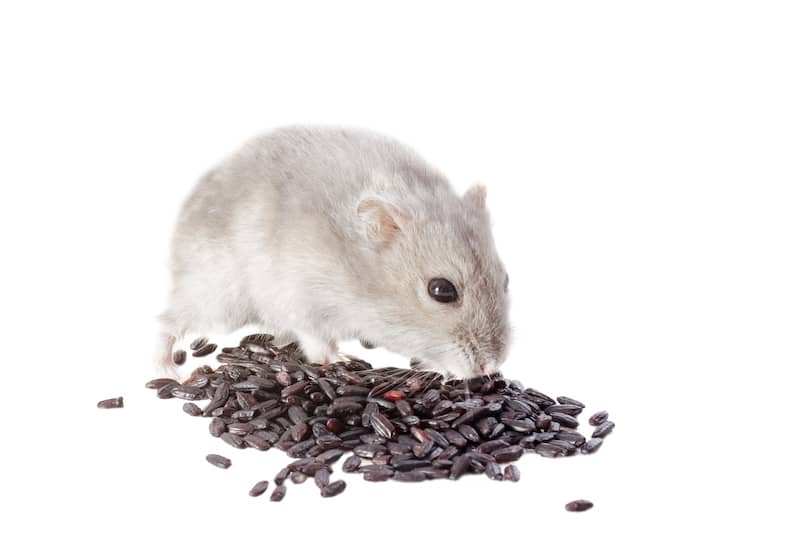
The ideal hamster diet will contain a mix of several things.
In terms of commercially available hamster foods, standard hamster pellets are usually the best choice and will often be formulated to contain plenty of nutrients your little furball needs.
You can then supplement this main food supply with small amounts of fresh fruit, vegetables or herbs and a special variety of hay called Timothy Hay that’s full of fibre and is ideal for small pets.
Occasional treats you can give your hammy include things like nuts, boiled egg or mealworms.
It also goes without saying that your hamster will need constant access to clean water through a water dispensing bottle!
Safe Fruit & Veg
Most fruits and vegetables are fine for hamsters to eat apart from citrus fruits, grapes and rhubarb.
Vegetables:
- Carrot
- Broccoli
- Cabbage
- Cauliflower
- Chicory
- Spinach
- Sweet peppers
- Cucumber
- Cress
- Courgette
Fruits:
- Apple
- Pear
- Peach
- Melon
However, all of these foods should be given in moderation, as it is not good to give hamsters too much fruit due to their high sugar content!
Hamsters can also enjoy nibbling on various herbs too!
- Sage
- Parsley
- Basil
- Coriander
Chewing and Gnawing Foods
Hamsters help keep their teeth in check and stop them growing too long by chewing and gnawing on things. You can do this by providing them with specialist gnawing toys, or you can use hard food or woods instead to be more economical!
For shredding or chewing materials, you can use:
- Coconut husks
- Plain, unbleached loofah
- Seagrass
- Hay cubes
- Pumice stone
- Cardboard
Instead of a gnawing block, you can also use untreated softwood. Simply bake them on a low heat for an hour and thoroughly wash them to make sure they’re safe. Suitable woods are:
- Apple
- Dogwood
- Willow
- Grapevine
- Hawthorn
- Hazelnut
- Yucca
- Poplar
- Quince
- Elm and Red Elm
- Pear
Foods To Avoid
You’d be forgiven for thinking your hamster is fine to eat any fruits or veg you throw its way, as well as any seemingly well-endorsed hamster food.
But you need to be careful!
As previously stated, hamsters are very sensitive, both in personality and stomach, and there are a few foods you definitely shouldn’t feed them!
Muesli Mixes
Hamster muesli mixes are very popular, however, due to hamsters hoarding and selective nature, they have been known to ignore the healthy high in fibre parts of the mix and instead just opt to eat the bits that are high in sugar. This completely defeats the point of trying to give them a balanced diet and can cause teeth and weight issues in the long run.
Here’s a list of other things considered unhealthy or harmful for your wee hammy:
- Apple seeds
- Raw beans
- Raw potatoes
- Almonds
- Citrus fruit
- Garlic
- Onion
- Rhubarb leaves or raw rhubarb
- Chocolate
- Sugary or salty foods
- Junk food
- Grapes
HEALTH
Hamsters can become ill very quickly and so it pays to frequently check them over for any signs of pain, illness or suffering.
A healthy pet should be behaving non-erratically, remaining active and have a shiny glossy coat with bright, dry eyes.
In general, you should check your hamster for any underlying illnesses once a week by handling them, checking for lumps and bumps and ensuring they are a normal weight. If you can feel their bones this may mean they aren’t eating enough.
Hamsters are also very vulnerable to diseases caused by infected food, water and dirty litter – so make sure to keep on top of your cleaning routine!
Disturbing Behaviour
Sometimes you may not notice any deterioration in your hamster’s health but rather some bizarre changes in their behaviour.
Generally, this is caused by a boring environment, which leads your hamster to become frustrated, stressed and unstimulated.
This frequently is displayed with unusual actions such as constant gnawing of the bars on their cage, running around in circles or any other odd repetitive behaviour.
And so, the easiest way to fix this irrational activity is to alleviate their boredom!
A bigger cage and more toys should solve the issue.
Another reason may be due to stress from being woken or disturbed too much by owners or young children, and if this might be the case you are advised to scale back your hamster handlings.
If symptoms do not improve, ask for advice from your veterinary professional!
Other Regular Health Checks
If you’re a first-time hamster owner, there are a few things you may not yet realise you need to be checking, as no one seems to mention them too often!
Firstly, you need to be aware of a hamster’s teeth!
As previously stated, hamsters can benefit from gnawing toys and foods to help keep their teeth healthy and in size, otherwise, they will overgrow! Keep an eye on your hamster’s teeth, as if they become too large or one break, they may have trouble eating.
Another thing to be aware of is your hamster’s scent glands.
In the cleaning section, we talked about how hamsters communicate through smell and so it is often beneficial to clean their cage in sections rather than all in one go so that scents remain.
These odours we referred to our secreted through scent glands in your hamster, which are actually more prominent in males than females. They are found on the hips of Syrians hamsters and the stomachs of Dwarf species and are often mistaken to be harmful lumps or bumps by owners.
They are however completely harmless and important for a hamster’s way of life.
As always though, if you notice a change in their glands such as size, discharge or bleeding – call your vet!
Finally, on a less serious note, if your hamster is rocking longer locks, you’ll need to comb and groom them to prevent hair from getting matted or tangled!
Hibernation
Something not too many people are aware of is that hamsters in the wild actually tend to hibernate in very cold months.
And sometimes they’ll do so in a cage too, especially if your room isn’t hot enough!
Owners can often get confused by a hibernating hamster, and there has been known to be many unfortunate incidents in which people assume they have died and so give them a badly timed send-off!
To work out whether your hamster is hibernating or not, gently touch it’s fur, feeling for signs of warmth or breathing.
A hibernating hamster will still be warm whereas a dead one will have lost all of its body heat.
To revive them from a long slumber, you can also warm them up using a heating pad or similar device, if they’re hibernating they should wake up once the pad reaches a significantly warmer temperature.
When To Go To The Vet
If you notice any of the following things, there’s a chance your hamster could be seriously unwell and so you will need to take them to a vet as soon as possible.
Symptoms to be crucially aware of include:
- Any abnormal lumps
- Possible injuries (displayed by limping etc)
- Firm, swollen stomach
- Aggressive behaviour
- Scratching in one area
- Sneezing or coughing (Hamsters can catch human colds!)
- Discharge from ears, nostrils or vagina
- Not eating or drinking
- Drinking too much water
- Sitting with a hunched position
- Sunken eyes
- Lethargy/non-activity at usual times
- A wet tail or wet faeces/diarrhoea
Updated Guidance (2026)
Hamsters are one of the most popular small pets in the UK, but they are also among the most commonly mis-housed and misunderstood. The tiny cages sold in many pet shops are wholly inadequate. Modern welfare standards demand significantly more space, deeper bedding, and species-appropriate care. This guide covers current best practice, reflecting the latest UK welfare guidance.
Cage Size — The Modern Minimum
- 100cm × 50cm minimum unbroken floor space (5,000 sq cm) — for ALL hamster species, including dwarfs
- Deep bedding: 6–10 inches (15–25cm) of paper-based substrate for burrowing — a fundamental natural behaviour
- Wire-top cages rarely provide sufficient floor space. Glass tanks or large bins (with ventilation) are often the best enclosures
- Multi-level cages: upper floors do NOT count toward the minimum floor space
Syrian vs Dwarf
| Syrian | Dwarf (Russian, Winter White, Robo) | |
|---|---|---|
| Size | 12–18cm | 5–10cm |
| Social | MUST live alone — fights can be fatal | Some can live in same-sex pairs (risky) |
| Handling | Generally friendlier, easier to handle | More prone to nipping, very fast |
| Lifespan | 2–3 years | 1.5–2 years (Robo: 3–3.5) |
| Health risk | Wet tail (higher risk) | Diabetes (feed low-sugar diet) |
Wheel Size — Getting It Right
- Syrian: Minimum 27–32cm (11–12 inches) diameter
- Dwarf: Minimum 20–22cm (8 inches) diameter
- Solid running surface only — wire mesh wheels trap feet and cause bumblefoot
- A wheel that’s too small forces the hamster to arch their spine, causing permanent injury
Wet Tail — A Veterinary Emergency
- Severe bacterial infection causing watery diarrhoea, wetness around the tail, lethargy, hunched posture
- Most common in young Syrians aged 3–10 weeks, often triggered by stress
- Fatal within 48 hours without treatment — see a vet immediately
- Treatment: antibiotics, fluid therapy, supportive care
FAQs
How long do hamsters live?
The average lifespan of a UK pet hamster is approximately 1.75 years (21 months) according to the Royal Veterinary College. Syrians typically live 2–3 years, Russian/Winter White dwarfs 1.5–2 years, and Roborovski hamsters 3–3.5 years. Good husbandry significantly impacts lifespan: appropriate cage size, deep bedding, correct wheel, stress-free environment, and species-appropriate diet (high-quality pellets, not muesli) all contribute to a longer, healthier life.