
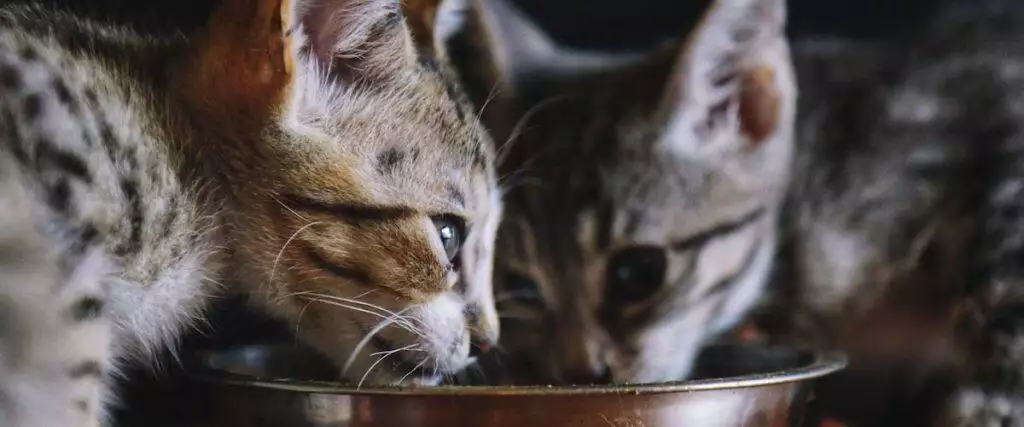
⚠️ Quick Answer: Royal Canin Kitten is our overall pick for most UK kittens — vet-recommended, backed by feeding trials, and available in wet and dry. If you take one thing from this guide: feed a mix of wet and dry, with wet as the main meals — not dry alone. Full reasoning (and what each option actually costs per day) below.
Kitten food is not simply “cat food in smaller portions” — it is a fundamentally different nutritional formulation. Kittens have significantly higher protein, fat, and calorie requirements per kilogram of body weight than adult cats because they are growing at an extraordinary rate: a kitten doubles its birth weight in the first week and reaches approximately 75% of its adult size by 6 months. The FEDIAF (European Pet Food Industry Federation) minimum for kitten food is 28g crude protein and 9g fat per 100g dry matter — substantially higher than adult cat food requirements.
Three nutrients are non-negotiable in kitten food: taurine (an amino acid essential for heart function and vision — cats cannot synthesise it, so it must come from food), DHA (an Omega-3 fatty acid critical for brain and eye development), and calcium/phosphorus in the correct ratio (for bone development without causing skeletal abnormalities).
Quick Comparison: Best Kitten Food UK 2026
Prices checked live at Zooplus UK on 26 August 2026 — most “best kitten food” guides don’t tell you what these actually cost per 100g, so we did the maths.
| Product | Type | Price per 100g* | Best For |
|---|---|---|---|
| Royal Canin Kitten | Dry + Wet | £1.14 (dry, 2kg) | Overall best / All breeds |
| Lily’s Kitchen Kitten Paté | Wet (paté) | £1.49 (wet) | Premium / Natural ingredients |
| Applaws Kitten | Dry | £0.83 (dry, 2kg, offer) | High-meat / Grain-sensitive |
| James Wellbeloved Kitten | Dry | £0.88 (dry, 1.5kg) | Sensitive stomachs |
| Natures Menu Kitten | Wet (cans) | £1.00 (wet) | High-meat wet (70% chicken) |
| Whiskas Kitten Pouches | Wet (pouches) | £0.37 (wet, 48-pack) | Budget wet feeding |
| Royal Canin Mother & Babycat | Mousse (wet) | £1.24 (wet) | Weaning (4-12 weeks) |
*Standard pack prices at zooplus.co.uk, 26 August 2026, excluding subscription discounts. Larger packs are cheaper per 100g (e.g. Royal Canin Kitten drops to £0.76/100g in the 10kg sack).
What Kitten Food Really Costs Per Day
Here’s the comparison we wish someone had shown us: the realistic daily cost for a typical 3-6 month old kitten. Our assumptions: wet-fed kittens eat roughly 3 × 85g servings a day at this age; dry-fed kittens roughly 50g a day. Always follow the feeding table on your pack — portions vary by age and expected adult weight — but these figures are the honest ballpark:
- Whiskas Kitten Pouches (wet): ~£0.95/day
- Applaws Kitten (dry): ~£0.42/day (at the current offer price)
- James Wellbeloved Kitten (dry): ~£0.44/day
- Royal Canin Kitten (dry): ~£0.57/day (2kg bag) or ~£0.38/day (10kg sack)
- Natures Menu Kitten (wet): ~£2.55/day
- Lily’s Kitchen Kitten Paté (wet): ~£3.75/day
The takeaway: dry feeding costs a fraction of premium wet feeding — which is exactly why our recommendation below is a mix. A wet-first day with a measured dry portion lands around £1-2/day with mid-range brands, and your kitten gets the hydration benefits of wet food without the premium-wet price tag.
Our Detailed Reviews
1. Royal Canin Kitten — Best Overall
Royal Canin Kitten is the brand most frequently recommended by UK veterinary practices for kittens from 4 to 12 months. The formulation is backed by extensive feeding trials (not just nutritional analysis), DHA from fish oil supports brain and eye development, and the kibble size is designed specifically for kitten jaw proportions. Available in dry kibble, wet pouches, and the ultra-soft Mother & Babycat mousse for weaning from 4 weeks. From £5.99 (400g) to £75.69 (10kg) for the dry food.
2. Lily’s Kitchen Kitten Paté — Best Natural Wet
Lily’s Kitchen uses freshly prepared meat (not rendered meat meal) as the primary ingredient — the kitten paté is 65% meat and fish, with no artificial preservatives, flavours, or colours. The smooth paté texture makes it easy for young kittens to eat, and the nutritional profile meets all FEDIAF kitten requirements. A premium option for owners who prioritise ingredient transparency: at £14.87/kg it’s the most expensive food in this guide, so many owners use it as the wet half of a mixed-feeding routine rather than the sole diet.
3. Applaws Kitten — Best High-Meat Dry
Applaws Kitten dry is a grain-free recipe with a minimum of 80% animal protein and chicken as the sole protein source — the highest meat content of any dry food in this guide, and currently also the cheapest per day at the offer price. Transparency note: Applaws dry cat food (produced by Fold Hill Foods) was part of the June 2021 UK recall linked to feline pancytopenia; the Royal Veterinary College’s investigation pointed to mycotoxin contamination in specific recalled batches, and the producer was re-authorised in August 2021. Current stock is not affected — but we’d rather you hear it from us than a forum thread.
4. James Wellbeloved Kitten — Best for Sensitive Stomachs
James Wellbeloved’s hypoallergenic kitten recipe uses a single named protein (turkey, or fish in the alternative recipe) with rice, and is free from beef, pork, wheat, dairy and soya — the usual suspects when a kitten’s digestion is struggling. Made in the UK, gentle formula, added Omega-3. At £8.79/kg it undercuts Royal Canin while staying firmly in the premium-dry bracket.
5. Natures Menu Kitten — Best High-Meat Wet
Natures Menu’s kitten cans are made with 70% chicken, gently steam-cooked, grain- and gluten-free, with added taurine. If you want a wet food where meat genuinely tops the ingredients list without paying Lily’s Kitchen prices, this is the sweet spot at £9.99/kg — roughly two-thirds of the Lily’s price for a comparable meat-first philosophy.
6. Whiskas Kitten Pouches — Best Budget Wet
At roughly £0.32 per pouch in the 48-pack, Whiskas Kitten 2-12 Months is the realistic budget option: a complete wet food with 90% of protein from animal sources and no added artificial colours or preservatives. The meat content and ingredient transparency don’t match the premium picks above — but a complete budget wet food beats dry-only feeding for a young kitten, and Whiskas makes wet-first feeding affordable at under £1/day.
7. Royal Canin Mother & Babycat — Best for Weaning
An ultra-soft mousse designed for the transition from mother’s milk to solid food (4 weeks to 4 months), enriched with prebiotics and DHA. If you’re hand-rearing or weaning a litter, this texture is the practical difference between a kitten that eats and a kitten that walks through its dinner. £29.09 for 12 × 195g cans.
Wet or Dry Food for Kittens? Our Clear Answer
Most guides hedge on this. We won’t: for most UK kittens, mixed feeding — wet food as the main meals plus a measured portion of kitten kibble — is the best default. And if you’re only going to feed one type before 12 weeks, make it wet.
The reasoning is practical, not ideological. Wet food is around 80% moisture versus roughly 8% in kibble, and cats have a naturally low thirst drive — so wet meals quietly do the hydration work that a water bowl often doesn’t. Young kittens also manage soft textures far more easily. On the other side, dry food is dramatically cheaper per day (see our cost table above), convenient for measured top-ups, and International Cat Care recommends offering both textures early precisely so your cat doesn’t become fixated on one type for life — a genuine problem if a medical condition later requires a diet change. Start weaning with wet or well-soaked kibble from 3-4 weeks; weaning is usually complete by 8 weeks (International Cat Care feeding guide).
Feeding Timeline
- 4-8 weeks: Weaning — ultra-soft mousse mixed with kitten milk replacer, gradually increasing solid food.
- 8-12 weeks: Fully weaned — wet kitten food 3-4 times daily. Begin introducing dry kibble.
- 3-6 months: Mix of wet and dry, 3 times daily. Free-access dry kibble is acceptable for most kittens.
- 6-12 months: Reduce to 2 meals daily. Continue kitten food until 12 months (do not switch to adult food early).
- 12 months: Transition gradually (over 7-10 days) from kitten food to adult cat food.
As an affiliate, we may earn a commission if you purchase through our links, at no extra cost to you. For adult cat food recommendations, see our Best Wet Cat Food and Best Dry Cat Food UK guides — part of our Best Cat Food UK guide series.
How much should I feed a kitten?
Follow the feeding table on your specific food’s packaging — portions depend on age and expected adult weight, and they differ between brands. As a rough guide, a 3-6 month old kitten eats about 50g of dry food or three 85g wet servings per day, split over 3-4 meals (reduce to 2 meals from 6 months). Weigh your kitten weekly: steady weight gain is the real test that portions are right.
Is wet or dry food better for kittens?
Mixed feeding is best for most kittens: wet food as the main meals for hydration and easy chewing, plus a measured portion of kitten kibble for cost and convenience. Wet food is around 80% moisture versus 8% in kibble, and cats have a low thirst drive, so wet meals matter more than a water bowl. Offering both textures early also prevents lifelong fixation on one type.
When can kittens eat dry food?
From about 3-4 weeks, kittens can start on kitten kibble soaked in water (or kitten milk replacer) until thoroughly soft. Weaning is usually complete by 8 weeks, and from then kittens can eat dry kitten food unsoaked alongside wet meals. Always provide fresh water, and choose kibble formulated for kittens — adult pieces are too large and nutritionally wrong.
Can kittens eat adult cat food?
No — kittens should stay on kitten food until around 12 months. Kitten formulations carry higher protein, fat, calcium and DHA levels than adult food (the FEDIAF minimum is 28g protein per 100g dry matter for growth), and adult food fed too early can shortchange bone and brain development. Switch to adult food gradually over 7-10 days at about one year old.