
Rabbits are intelligent, curious animals that need daily mental and physical stimulation — yet they are one of the most frequently neglected pets in the UK. A bored rabbit develops destructive behaviours (chewing furniture, digging carpet), stress behaviours (bar biting, over-grooming), depression, and even aggression. Toys are not luxury extras — they are essential welfare requirements, directly alongside space, diet, and companionship.
The Three Types Your Rabbit Needs
1. Chew Toys (Dental Health)
Rabbit teeth grow continuously (2-3mm per week). Without appropriate chewing materials, teeth overgrow and cause painful malocclusion, abscesses, and inability to eat. Safe chew options: willow sticks and balls, apple wood, untreated pine, seagrass mats, hay-based chew blocks.
2. Foraging Toys (Mental Stimulation)
Wild rabbits spend 6-8 hours per day foraging. Domestic rabbits need foraging activities to prevent boredom. Snuffle mats, treat balls, puzzle feeders, hay-stuffed cardboard tubes, and the Rosewood Naturals Maze Challenge all encourage natural searching behaviour.
3. Exploration Toys (Physical Activity)
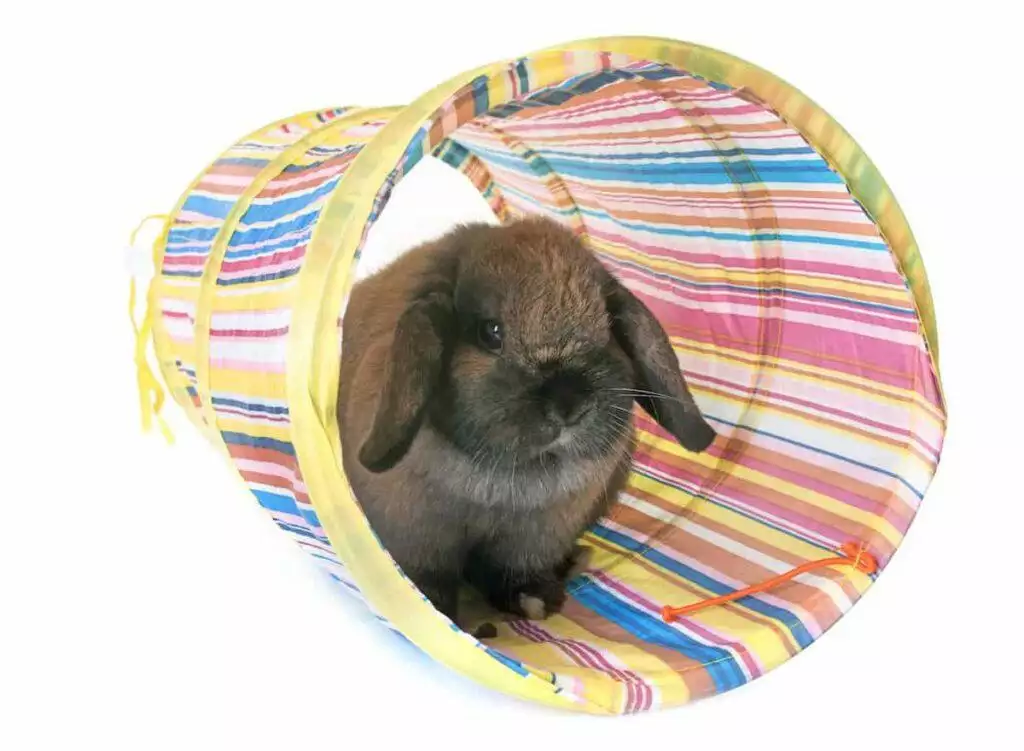
Rabbits need to run, jump, and explore. Tunnels (mimicking burrows), cardboard castles, digging boxes (soil, shredded paper, or child-safe sand), and platforms all encourage natural movement and exploration.
Safe vs Unsafe Materials
| ✅ Safe | ❌ Unsafe |
|---|---|
| Willow, apple wood, birch Seagrass, banana leaf Untreated pine, poplar Cardboard (no tape/staples) |
Treated/painted wood Plastic (if chewed/ingested) Rubber or foam Anything with small detachable parts |
For hutch recommendations, see Best Rabbit Hutch UK.
Part of our Rabbit Care Guide.