
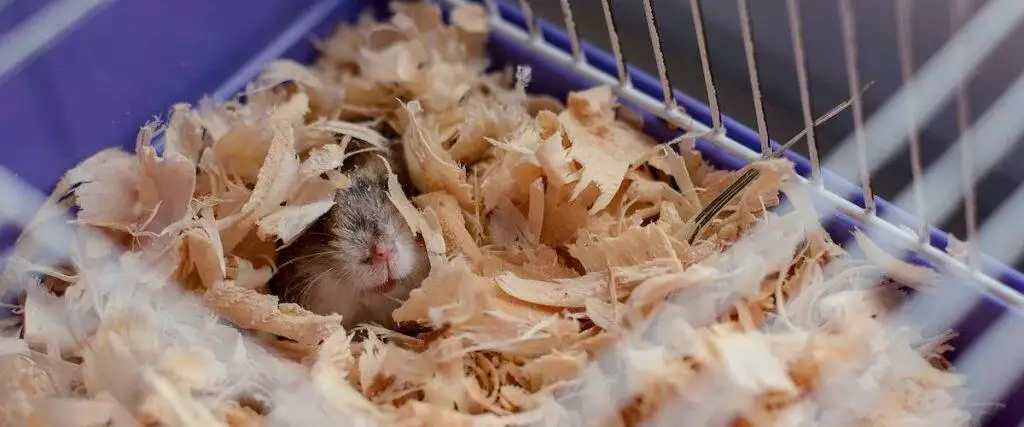
Choosing the right bedding for your hamster isn’t just about comfort — it directly affects their respiratory health, their ability to burrow (a core behavioural need), and how often you need to clean their cage. We’ve tested and reviewed the best hamster bedding options available in the UK, from paper substrates to safe wood shavings.
Why Bedding Depth Matters More Than You Think
In the wild, hamsters are burrowing animals that create complex underground tunnel systems up to 1 metre deep. Even in captivity, burrowing is one of their most important natural behaviours — it reduces stress, provides security, and gives them space to hoard food (a behaviour that’s hardwired into their DNA).
The RSPCA and German hamster welfare organisations (which lead the world in hamster care research) recommend a minimum of 15cm bedding depth, with 20–30cm being ideal. Most UK hamster cages are too shallow for proper burrowing, which is why experienced owners now prefer large bin cages, Ikea Detolf conversions, or Niteangel enclosures that allow deep substrate.
Best Hamster Bedding UK: Our Reviews
1. Kaytee Clean & Cozy — Best Overall
Kaytee Clean & Cozy is the benchmark for hamster bedding worldwide. It’s made from 100% recycled paper, is 99.9% dust-free, and is phenomenally soft — softer than most competing paper beddings. It absorbs up to 6× its weight in liquid and holds burrow shapes reasonably well, especially when mixed with hay.
Price: ~£12–£16 for 49.2L | Dust level: 99.9% dust-free | Burrow-holding: Good (excellent with hay mix)
Pros: Industry-standard quality, extremely soft, virtually dust-free, superb absorbency, widely available (Pets at Home, Amazon). Cons: Can be expensive for very large cages, white version can look messy quickly, some batches occasionally dustier than others.
2. Fitch First Class — Best UK Paper Bedding
Fitch is a UK-made paper bedding that’s become extremely popular in the hamster community. It’s even softer than Kaytee in many owners’ experience, holds tunnels better, and is competitively priced. The natural brown colour also looks more aesthetically pleasing than white bedding.
Price: ~£8–£12 for 10kg (approximately 60L) | Dust level: Very low | Burrow-holding: Very good
Pros: UK-made, excellent value per litre, superb burrow-holding, natural appearance, very soft. Cons: Less widely stocked in high-street pet shops (mainly online), darker colour makes it harder to spot wet patches.
3. Aspen Wood Shavings — Best Wood Option
If you prefer wood shavings, aspen is the only safe option. Unlike cedar and pine, aspen doesn’t contain aromatic phenols (the chemicals responsible for that “nice” smell) that damage hamster respiratory systems and livers. Aspen is good for odour control and provides a different texture to paper bedding.
Price: ~£6–£10 for 10L compressed | Dust level: Low (choose dust-extracted brands) | Burrow-holding: Moderate
Pros: Natural wood feel, good odour control, affordable, safe for hamsters. Cons: Doesn’t hold burrows as well as paper, can stick to long-haired Syrians’ fur, less absorbent than paper, harder to find genuine aspen in UK shops (check labels carefully).
4. Carefresh Natural — Well-Known Alternative
Carefresh is one of the most recognised names in small animal bedding. Their Natural formula is made from reclaimed wood pulp fibre and is dust-free, absorbent, and available in various colours. However, some UK hamster owners find it slightly harder and less soft than Kaytee or Fitch.
Price: ~£10–£14 for 14L | Dust level: Very low | Burrow-holding: Moderate
Pros: Widely available, good absorbency, multiple colour options, reputable brand. Cons: More expensive per litre than competitors, firmer texture (some hamsters prefer softer bedding), coloured versions may stain light-furred hamsters.
5. Chipsi Classic Aubiose (Hemp) — Best Eco-Friendly
Hemp bedding offers exceptional absorbency (up to 4× wood shavings) and is fully compostable. It’s naturally antibacterial, very low-dust, and provides a different texture that many hamsters enjoy. It works particularly well mixed with paper bedding for variety.
Price: ~£12–£16 for 20kg bale | Dust level: Very low | Burrow-holding: Good when packed
Pros: Exceptional absorbency, compostable, naturally antibacterial, amazing value per kg. Cons: Heavier than paper bedding, coarser texture, 20kg bale is very large (storage needed), not as soft underfoot as paper.
Comparison Table
| Bedding | Material | Dust | Burrowing | Price/L | Best For |
|---|---|---|---|---|---|
| Kaytee Clean & Cozy | Paper | ★★★★★ | ★★★★☆ | ~£0.28 | All hamsters |
| Fitch First Class | Paper | ★★★★★ | ★★★★★ | ~£0.17 | Deep burrowing |
| Aspen Shavings | Wood | ★★★★☆ | ★★★☆☆ | ~£0.60 | Mixing with paper |
| Carefresh Natural | Fibre | ★★★★★ | ★★★☆☆ | ~£0.86 | Multi-colour cages |
| Chipsi Hemp | Hemp | ★★★★☆ | ★★★★☆ | ~£0.13 | Eco-conscious, budget |
Bedding to Avoid
Some products sold as “hamster bedding” in UK pet shops are genuinely dangerous:
- Cedar shavings — Contain plicatic acid and other aromatic phenols that cause chronic respiratory damage and liver disease. Cedar was banned from laboratory animal bedding decades ago, yet it’s still sold in pet shops.
- Non-kiln-dried pine shavings — Contain abietic acid and other aromatic hydrocarbons. Only use pine if it is explicitly labelled “kiln-dried” and “dust-extracted” — and even then, paper bedding is safer.
- Cotton wool / “fluffy” nesting material — Can cause fatal intestinal blockages if swallowed and can wrap around limbs, cutting off circulation. This includes products marketed specifically for hamsters with cotton or polyester fibres.
- Cat litter — Clumping litter causes fatal intestinal blockages. Even non-clumping clay litter is far too dusty for hamster lungs.
- Newspaper — The ink can be toxic, it’s not absorbent enough, and becomes cold and soggy rapidly.
- Scented bedding — Any artificial fragrances irritate hamsters’ highly sensitive respiratory systems. Always choose unscented varieties.
Safe Nesting Material
In addition to deep substrate for burrowing, hamsters need nesting material to build a cosy sleeping chamber within their burrows. The safest options are:
- Plain, unscented toilet paper — Tear into strips and place in the cage. Your hamster will shred it further and build a nest. This is the #1 recommended nesting material by hamster welfare organisations worldwide.
- Unbleached kitchen roll — Similar to toilet paper, safe and easily shredded.
- Timothy hay — Doubles as food and nesting material. Avoid meadow hay if it’s dusty.
Cleaning Schedule
| Task | Frequency | Notes |
|---|---|---|
| Spot clean toilet corner | Every 2–3 days | Remove soiled bedding from the specific area your hamster uses as a toilet |
| Check food hoards | Weekly | Remove any fresh food that’s gone mouldy (leave dry hoards alone — taking them causes stress) |
| Partial bedding change | Every 2–3 weeks | Replace 30–50% of the bedding, keeping some of the old bedding so it retains your hamster’s scent |
| Full cage clean | Every 4–6 weeks | Complete change with cage wipe-down (pet-safe disinfectant or white vinegar) |
Frequently Asked Questions
How deep should hamster bedding be?
A minimum of 15cm (6 inches), ideally 20–30cm. This allows hamsters to express their natural burrowing behaviour, which is essential for their mental health. Research from German hamster welfare organisations shows that hamsters with deep bedding display significantly fewer signs of stress and stereotypic behaviour (like bar chewing).
Can hamsters use guinea pig bedding?
Many guinea pig beddings are also suitable for hamsters — paper bedding (Kaytee Clean & Cozy) and hemp (Aubiose) work well for both species. However, fleece liners (popular for guinea pigs) should NOT be used for hamsters, as they will chew through the fabric and the polyester fibres can cause intestinal blockages.
Is Carefresh safe for hamsters?
Yes — Carefresh is safe and dust-free. However, many experienced hamster owners in the UK prefer Fitch First Class or Kaytee Clean & Cozy because they’re softer and hold burrows better. Carefresh works well but isn’t necessarily the best option for the price.
What is the cheapest safe hamster bedding?
Chipsi Hemp (Aubiose) at ~£12–16 for a 20kg bale is the cheapest safe option per litre. For paper bedding, Fitch First Class offers the best value at roughly £0.17/L compared to Kaytee at £0.28/L. Always avoid the cheapest sawdust or scented shavings — the vet bills from respiratory infections will far exceed any savings.