
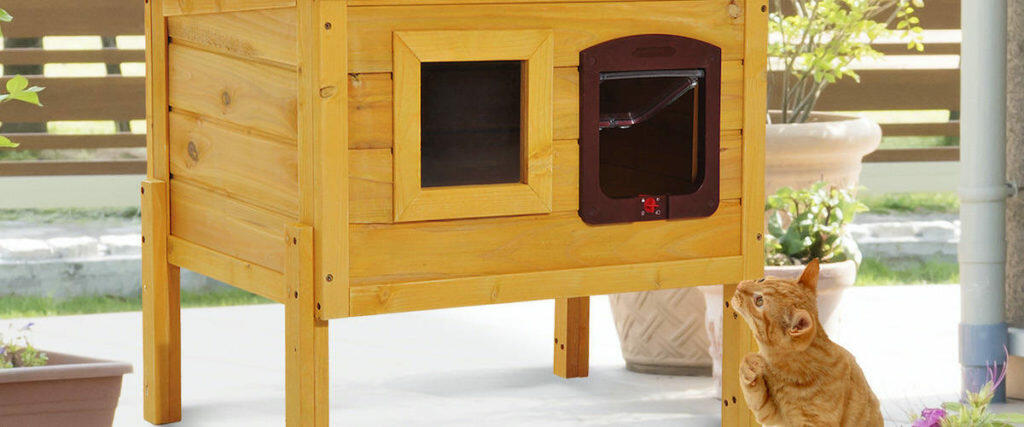
Whether you’re providing shelter for a feral colony, an adventurous garden cat, or a pet that refuses to come inside, a good outdoor cat house needs to withstand everything UK weather throws at it. In this updated 2026 guide, we compare insulated, waterproof, and heated outdoor cat shelters — from premium handmade options to budget-friendly DIY solutions.
Best Outdoor Cat Houses Compared
| Product | Material | Insulated | Waterproof | Heated | Price |
|---|---|---|---|---|---|
| Mr Snugs KatDen | UV-resistant plastic | Yes | Yes | No | £70-90 |
| Dingo Insulated Cat House | Treated wood | Yes (EPS150) | Yes | Self-heating | £80-130 |
| Kitty Tube Gen 3 | Heavy-duty plastic | Yes (foam) | Yes | Optional pad | £90-120 |
| Petsfit Wooden Cat House | Cedar / fir wood | No | Asphalt roof | No | £50-80 |
| K&H Outdoor Heated Kitty House | Nylon | Yes | Yes | Yes (electric) | £60-90 |
Top Outdoor Cat House Reviews
1. Mr Snugs KatDen — Best Overall
The Mr Snugs KatDen is the gold standard for outdoor cat shelters in the UK. Its one-piece, UV-resistant plastic body requires zero assembly and provides excellent weatherproofing against rain, wind, and frost. The raised floor prevents dampness from ground contact, and the smooth interior makes cleaning effortless — simply wipe down. It’s compact enough for a small garden but spacious inside for a large adult cat. The entrance tunnel design blocks drafts while allowing easy access. At £70-90, it’s the most reliable year-round option available.
2. Dingo Insulated Cat House — Best Insulation
Handmade in the UK, Dingo cat houses feature 25mm EPS150 insulation in walls and floor — providing genuine thermal protection during British winters. The wood is treated with pet-safe, water-based preservative, and the roof is hinged for easy cleaning. Some models include self-heating technology using heat-reflective material that bounces the cat’s body heat back. The soft thermal barrier flap on the entrance keeps warmth in and rain out. Premium priced at £80-130 but built to last outdoors for years.
3. Kitty Tube Gen 3 — Best for Multiple Cats
The unique cylindrical Kitty Tube uses thick foam insulation to create an effective barrier against cold, wind, and moisture. Its elevated design prevents snow and rain accumulation, and the interior maintains warmth through passive insulation. Can accommodate multiple cats or be customised with double insulation for extreme cold. An optional heating pad adds active warmth. At £90-120, it’s a premium choice but one of the most thermally effective shelters available.
4. Petsfit Wooden Cat House — Best Budget
The Petsfit offers solid wood construction at a reasonable price point. The asphalt roof provides effective rain protection, and the elevated floor keeps the interior dry. Some models include two doors (with an “escape door” for safety), preventing other animals from cornering unwanted visitors. While not insulated, adding a SnuggleSafe heatpad or self-heating blanket makes it suitable for mild UK winters. At £50-80, it’s the most affordable quality option.
DIY Outdoor Cat Shelter
For cat charities and feral colony carers on a budget, a simple DIY shelter works surprisingly well:
- Get a large plastic storage box (minimum 60L)
- Cut a 15cm diameter entrance hole in one end
- Line the inside with foil-backed insulation board (available from B&Q, £5-8)
- Add straw (not hay — straw repels moisture, hay absorbs it)
- Raise off the ground on bricks or a pallet
Total cost: under £20. This simple shelter has saved countless feral cats during UK winters and is recommended by Cats Protection for community cat carers.
What Makes a Good Outdoor Cat House?
- Waterproofing — UK weather demands complete rain protection. Look for sealed roofs and raised floors.
- Insulation — Foam, EPS, or self-heating material helps maintain warmth in winter.
- Draft protection — Entrance tunnels or flaps block cold winds while allowing access.
- Ventilation — Prevents condensation and mould build-up inside.
- Easy cleaning — Removable roofs or wipe-clean interiors are essential for hygiene.
- Elevated floor — Prevents damp rising from the ground.
FAQs
What is the best insulation for an outdoor cat house?
Rigid foam board (polystyrene/EPS) provides the best insulation-to-thickness ratio. For DIY shelters, foil-backed insulation board from B&Q or Wickes works well. Straw is the best natural bedding — it repels moisture and retains warmth. Never use blankets or towels as they absorb moisture and freeze, making the cat colder.
Do outdoor cat houses need heating?
Most well-insulated cat houses in the UK don’t require active heating — a cat’s body heat (around 38°C) is sufficient in an insulated, draft-proof space. However, for uninsulated shelters or particularly harsh winters, a thermostatically controlled heating pad (like K&H or SnuggleSafe) adds significant comfort. Always use pet-safe, chew-resistant heating products.
How do I encourage a cat to use an outdoor shelter?
Place the shelter in a quiet, sheltered spot (against a wall or fence, facing away from prevailing wind). Add familiar bedding or catnip inside. Place food near (but not inside) the shelter initially. Most cats will investigate within a few days. Don’t force the cat inside — let them explore at their own pace.