
🔄Last Updated: 4 March 2026•Originally published: 5 February 2020
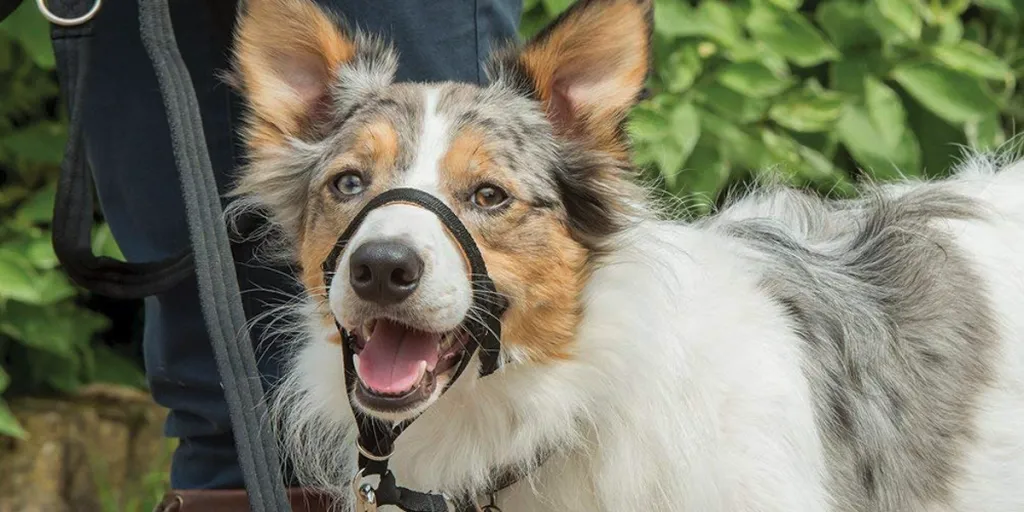
A headcollar is the most effective tool available for managing dogs who pull on the lead — and the one most commonly recommended by force-free, reward-based trainers. Unlike a harness, which allows the dog to lean their full body weight forward, a headcollar controls the head directly: where the head goes, the body follows. This is the same principle used in horse halters and has been standard in equine management for thousands of years.
Headcollar vs Harness: Which to Choose?
| Feature | Headcollar | Front-clip harness |
|---|---|---|
| Pulling control | Immediate, excellent | Good, less immediate |
| Training needed | Desensitisation required | Minimal adjustment |
| Reactive dogs | Can redirect head away from triggers | Less control over head direction |
| Acceptance | Some dogs initially resist | Most dogs accept immediately |
Quick Comparison: Best Dog Headcollars UK 2026
| Product | Key Feature | Best For |
|---|---|---|
| Halti Optifit | Safety strap + adjustable noseband | Overall best / Strong pullers |
| PetSafe Gentle Leader | Developed by vet behaviourist | Reactive dogs / Barking/lunging |
| Canny Collar | Pressure behind head, not on snout | Dogs who resist nose loops |
| Gencon All-in-1 | Combined headcollar + lead | Anxious/reactive dogs |
Fitting and Training Tips
- Desensitise gradually: Never put a headcollar on and immediately go for a walk. Spend 3-5 days pairing the headcollar with high-value treats indoors before attempting outdoor walks.
- Keep the lead loose: A tight lead on a headcollar jerks the dog’s neck. Always use a loose lead and let the headcollar do its work passively.
- Safety strap: Always use the safety strap that clips to the dog’s flat collar. If the headcollar slips off (it can happen with flat-faced breeds), the safety strap prevents the dog from being loose.
- Not a muzzle: Dogs can eat, drink, pant, and bark normally while wearing a headcollar. It is a training tool, not a restraint.
For lead recommendations, see our Best Dog Lead UK guide.