Keeping backyard chickens has grown tremendously in popularity across the UK, offering the joy of fresh eggs and lively garden companions. However, significant legal changes came into effect recently regarding registration and biosecurity. Whether you have two rescue hens or twenty, here are the strict rules and best practices for 2026.
The Great Law Change: Mandatory DEFRA Registration
The most important legal detail for backyard keepers changed in late 2024. It is now a legal requirement to register your birds with the Animal and Plant Health Agency (APHA) via DEFRA, even if you keep just a single chicken.
Previously, registration was only required if you had a flock of 50 or more. The law was changed in response to the devastating outbreaks of Avian Influenza (Bird Flu). Registration is free, but you must update your details annually. This allows the government to quickly contact keepers in specific radius zones if an outbreak occurs nearby.
Property Rules and Statutory Nuisance
Before buying a coop, check your property deeds or tenancy agreement. Many modern housing estates have restrictive covenants explicitly banning poultry or livestock. Even if permitted, you must ensure your flock doesn’t become a “statutory nuisance” under the Environmental Protection Act. Roosters (cockerels) are not illegal to keep in residential areas, but their early morning crowing almost guarantees noise complaints from neighbours, which the local council will enforce. For eggs, you do not need a rooster.
Avian Flu and “Housing Orders”
Avian Influenza is a persistent threat. During periods of high risk (typically autumn/winter), the UK government may declare an Avian Influenza Prevention Zone (AIPZ) and implement a mandatory Housing Order.
When a housing order is active, it is illegal to let your chickens free-range in the garden. They must be kept in a covered run with a solid, waterproof roof (like corrugated plastic or heavy-duty tarpaulin) to prevent wild bird droppings from contacting your flock. Their food and water must also be kept entirely enclosed and inaccessable to wild birds.
Coop Space and Setup
Happy hens need space to scratch, dust-bathe, and roost.
- The Coop (House): Must be dry, draught-free, and well-ventilated. They need sturdy wooden perches (at least 2 inches wide, not round dowels) to sleep on, and roughly one nesting box for every three or four hens.
- The Run: Even if you plan to let them free-range occasionally, they need a secure run for when you aren’t watching. Provide a minimum of 1 square meter per bird in the run, though more is always better.
Defeating Mr. Fox: A Robust Setup
Foxes are incredibly cunning, strong, and active during the day as well as night. A cheap coop from the internet will not stop a determined fox.
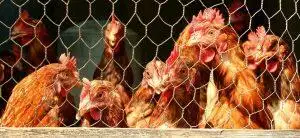
- Ditch the Chicken Wire: Traditional thin, hexagonal chicken wire is designed to keep chickens in, not predators out. A fox will chew right through it. You must use heavy-duty, galvanized weld-mesh (at least 16 gauge, with 1-inch holes).
- Anti-Digging Measures: Foxes will dig under fences. Either lay a physical wire mesh floor across the bottom of the run (covered by woodchip), or bury an “L-shaped” skirt of mesh extending outwards from the base of the run for at least a foot.
- Padlocks: Foxes can operate simple latches and turn-buttons. Secure your coop doors with strong carabiners or padlocks every single night at dusk.
Reviewed by Dr. Sarah Jenkins, MRCVS
Dr. Jenkins is a fully practicing veterinary surgeon in the UK with over 15 years of clinical experience in small animal medicine and canine behaviour. She reviews and verifies our health content to ensure medical accuracy.