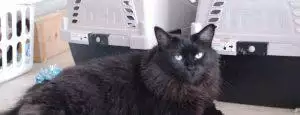
Most cats and kittens take to litter trays instinctively — they prefer to bury their waste. But when things go wrong, litter tray problems are one of the most common reasons cats are surrendered to shelters. Understanding why your cat avoids their tray is the key to solving the issue. Always rule out medical causes first.
Kitten Litter Training
- Kittens learn from their mother, but you can reinforce by placing them in the tray after waking up and after meals
- Restrict access to a small area initially — large houses are overwhelming for tiny kittens
- Praise successful use — never punish accidents (increases stress, makes the problem worse)
- Use a tray with low sides so kittens can easily climb in
The n+1 Rule (Multicat Households)
One litter tray per cat, plus one extra. Two cats need three trays. Three cats need four. Place them in different locations — never all in one spot. This prevents territorial blocking and ensures every cat always has access to a clean tray.
Covered vs Open Trays
| Open Tray | Covered (Hooded) Tray | |
|---|---|---|
| Pros | Better ventilation, cat can see surroundings (feels safer), easier to clean | Contains odour and litter scatter, offers privacy |
| Cons | More litter tracking, less odour containment | Traps ammonia inside, can feel claustrophobic, one exit = ambush risk in multicat homes |
| Best for | Multicat homes, larger cats, cats who dislike enclosed spaces | Single-cat homes, cats who prefer privacy |
Why Your Cat Avoids the Tray
- Medical issue: UTI, kidney disease, diabetes, arthritis — always see your vet first
- Dirty tray: Scoop daily, full change weekly
- Wrong litter: Most cats prefer fine-grain, unscented clumping litter. Avoid strong fragrances
- Wrong location: Quiet, accessible, away from food/water, with escape routes. Not in busy areas or near noisy appliances
- Wrong size: Tray should be 1.5× the cat’s length (nose to tail base)
- Stress: New pets, house moves, routine changes
FAQs
My cat suddenly started going outside the tray — what should I do?
A sudden change in litter habits is almost always a sign that something is wrong — either medically or environmentally. Step 1: Vet visit to rule out urinary tract infection, cystitis, kidney disease, or pain (especially in older cats with arthritis who may struggle to climb into a high-sided tray). Step 2: Review cleanliness, litter type, tray location, and any recent household changes. Never punish — it doesn’t work and makes the cat more anxious.
Reviewed by Dr. Sarah Jenkins, MRCVS
Dr. Jenkins is a fully practicing veterinary surgeon in the UK with over 15 years of clinical experience in small animal medicine and canine behaviour. She reviews and verifies our health content to ensure medical accuracy.