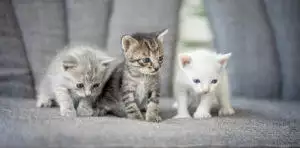
The Bengal cat is one of the most visually striking domestic cats in existence — their spotted or rosetted coat, muscular athletic build, and wild-looking facial features reflect their ancestry as a hybrid between domestic cats and the Asian Leopard Cat. But the Bengal is far more than just a beautiful coat. They are intensely active, intelligent, vocal, and demanding cats that require a specific kind of owner — one prepared for a feline that behaves more like a small wild animal with a domestic personality than a conventional house cat.
- Quick Facts
- Health — Key Conditions
- •PRA-b — Progressive Retinal Atrophy (Bengal type)
- •PK Deficiency — Pyruvate Kinase Deficiency
- •HCM — Hypertrophic Cardiomyopathy
- •Flat Chested Kitten Syndrome (FCKS)
- The Temperament Reality
- Bengal Ownership Law: F1, F2, F3+ Explained
- Environmental Needs
- Bengal Cost UK 2026
- FAQs
- •Are Bengal cats legal in the UK?
- •🐱 Food Safety Guides
- • 📚 Related Reading
Quick Facts
| Characteristic | Detail |
|---|---|
| Size | Medium-large (4–7 kg; muscular and athletic) |
| Coat | Short, dense, luxuriously soft — spotted or marbled rosettes. Minimal grooming |
| Lifespan | 12–16 years |
| Temperament | Extremely active, intelligent, vocal, demanding — “dog-like” and water-fascinated |
| Good for first-time cat owners? | No — requires experienced, committed ownership |
| Indoor/outdoor? | Best with secure outdoor access (catio/cat-proof garden) or exceptionally enriched indoor environment |
| Kitten cost (UK 2026) | £1,200–£2,000 pet quality; up to £5,000 show/breeding |
Health — Key Conditions
PRA-b — Progressive Retinal Atrophy (Bengal type)
Bengals carry a breed-specific form of PRA that causes progressive blindness:
- Retinal degeneration begins early — vision problems can appear from 7 weeks, with significant impairment by 2 years
- UK/Ireland carrier prevalence: approximately 18% — this is a significant proportion of the breeding population
- Inheritance: autosomal recessive. DNA test available and critical — both parents must be tested
- There is no treatment — affected cats go blind. Prevention through breeding only from tested parents is essential
PK Deficiency — Pyruvate Kinase Deficiency
An inherited enzyme deficiency causing chronic haemolytic anaemia (premature red blood cell destruction):
- Symptoms: anaemia, lethargy, weakness, muscle wasting, increased heart rate, pale gums
- Severity varies — some cats show mild signs; others develop severe, life-threatening anaemia
- Inheritance: autosomal recessive. DNA test available — both parents should be tested
HCM — Hypertrophic Cardiomyopathy
Bengals are predisposed to HCM. No Bengal-specific DNA test exists — screening requires regular echocardiograms of breeding cats by a veterinary cardiologist. A ProBNP blood test is not a substitute for echocardiography. Ask breeders for annual cardiac screening certificates.
Flat Chested Kitten Syndrome (FCKS)
A condition where kittens develop thorax compression. Bengals are among the breeds more commonly affected. Severity ranges from mild (self-resolving) to severe (fatal). Believed to have a genetic component. Responsible breeders monitor litter development closely.
The Temperament Reality
Bengals are not a “normal cat” experience. If you want a calm, easy-going companion, choose a different breed. Bengals need:
- Vigorous daily play sessions (interactive wand toys, fetch, puzzle feeders)
- Vertical space (tall cat trees, wall shelves, climbing opportunities)
- Mental stimulation (many Bengals can be clicker-trained, learn tricks, and enjoy puzzle toys)
- Companionship — many Bengals do better with another active cat. A bored, lonely Bengal is a destructive Bengal
- Water access — many Bengals genuinely enjoy water and will play in sinks, showers, and water bowls
Bengal Ownership Law: F1, F2, F3+ Explained
Because Bengals originate from Asian Leopard Cat × domestic cat crosses, UK law classifies them differently depending on the generation:
| Generation | Parents | UK Legal Status |
|---|---|---|
| F1 | Asian Leopard Cat × domestic cat | ⚠️ Requires a Dangerous Wild Animals (DWA) Licence — not easily obtained, requires council inspection and compliance. Effectively restricted to specialist breeders |
| F2 | F1 Bengal × domestic cat | ✅ Legal since 2007 when removed from DWA schedule — no licence required |
| F3 and beyond | Further domestic crosses | ✅ Fully domestic cats in law — no restrictions |
Almost all pet Bengals sold in the UK are F4, F5, or later generations — fully domestic in law and temperament. When buying, ask the breeder specifically what filial generation the kitten is. Reputable sellers will know and document this clearly.
⚠️ 2024 Animal Welfare Committee Recommendation: The AWC published a recommendation in 2024 to potentially restrict further deliberate breeding of F1 and F2 hybrids due to welfare concerns for wild cat parents. As of 2026, this has not yet become law but may affect future availability of early-generation Bengals. Pet-quality F3+ Bengals are unaffected.
Environmental Needs
Bengals in inappropriate environments become unhappy and destructive:
- Space — not suited to small flats. Need room to run, climb, and leap
- Height — cat trees of 1.8m+ are essential; wall-mounted shelving (“catify” your home) adds invaluable explorable space
- Outdoor access (safe) — a secure “catio” (enclosed outdoor run) is ideal; allows natural enrichment without road risk or wildlife predation
- Interactive play — minimum 30–60 minutes active play daily; wand toys, laser (always end with physical prey to catch), puzzle feeders
- Cat exercise wheel — Bengals are one of the few cat breeds that consistently use exercise wheels; a genuine investment in their wellbeing
Bengal Cost UK 2026
| Cost | Range |
|---|---|
| Purchase (F3+, pet quality) | £300–£2,500 |
| Purchase (show/breeder quality) | £2,500–£5,000 |
| Monthly food (high-quality wet) | £25–£50 |
| Insurance (lifetime cover) | £15–£35/month |
| Environmental enrichment (cat tree, wheel etc.) | £200–£500 setup, one-off |
| Annual vet (incl. cardiac monitoring) | £200–£500 |
| Annual ongoing cost | £800–£2,000 |
FAQs
Are Bengal cats legal in the UK?
Yes — domestic Bengal cats (F5 generation and beyond, i.e., at least 5 generations removed from the wild Asian Leopard Cat) are completely legal to own in the UK without any licence. Earlier generations (F1–F4) are classified as wild or hybrid animals and require a Dangerous Wild Animals licence. All reputable UK Bengal breeders sell F5+ kittens only. If unsure about generation, ask the breeder to confirm.
🐱 Food Safety Guides
Wondering what human foods are safe for your cat? Check our detailed guides: